

“Life’s hard. It’s supposed to be. If we didn’t suffer, we’d never learn anything.”
-Before Sunset (2004)
On the brink of a milestone, my eyes wander ahead. I gaze towards the view as soon as it’s visible though before it comes into focus. I long for the glory that awaits me at the mountaintop, churn ahead after the promise of the light. It’ll all be worth it, I tell myself.
I learned about the Japanese practice of misogi from Henry Abbott’s new book Ballistic. He details the annual trials that NBA sharpshooter Kyle Korver joined during his work with Marcus Elliott at P3: one year, a nine hour paddleboard journey on the Pacific Ocean; another, carrying a boulder the length of a 5K, underwater.
Korver credits the best shooting season of his career with the adoption of the tradition.
The misogi is effectively an annual test of will: an arduous physical challenge that has the potential to rewire our brain. In describing the effects of neuroplasticity, Abbott writes, “[All of our movement patterns can change] because the brain tells the story of how we move, and brains can change.”1
He continues:
“Marcus [Elliot’s] notion of the misogi is that you dream up your own definition of a task that you suspect you have about a 50 percent chance of completing. Make it novel. If you’re a runner, don’t run. There’s value in going in a little blind and feeling out of place. No entry fees, no tickets, no cheering audiences. Just you and perhaps a few friends, in nature, stretching at the taffy of the possible.”
While the link between paddleboarding and jumpshooting seems thin, it became obvious to Korver when he completed the journey. As Abbott explains, Korver’s focus on the minute details of each stroke taught him a new way to think. Consequently, not coincidentally, his jumpshot that season was better than ever before.
I operate with a sort of “anything worth doing is worth doing well” ethos, but this isn’t something I say in job interviews or teach to my students. I don’t think I’ll preach it to my daughter. It’s my actions that reveal this sensibility somewhere in me.
In elementary school I was a perfectionist. I cried when I lost the spelling bee both times.2 A twenty year gymnastics career helped train that disposition out of me with each crash into the foam pit. My college application essay was titled “Unpointed Toes” and it was about my embrace of failure on the path to success, appreciating the process more than the destination.
That mindset was particularly valuable as a first year teacher when every day was a disaster. I’m bad at this now, but I’m getting better, and soon I’ll be good. These days, I’m a good teacher.
I’m proud of the way I rise to challenges and apply my skillset to overcome them. The things I do well, I do really well.
That said, I think I limit myself to doing things that I can – given the right amount of practice – be good at. I’ll climb the proverbial mountain as long as I think I can get to the top.
But I want more for myself.
Enter the misogi.
I thought I invented the following challenge, but it apparently exists on social media, so for the sake of consistency I’ll call it The Impossible Mile for now, though I’ll reveal my true name for it later.
Four times around the track:
One lap of broad jump, push-up (burpees)
One lap of walking lunges
One lap of bear crawling
One lap of running
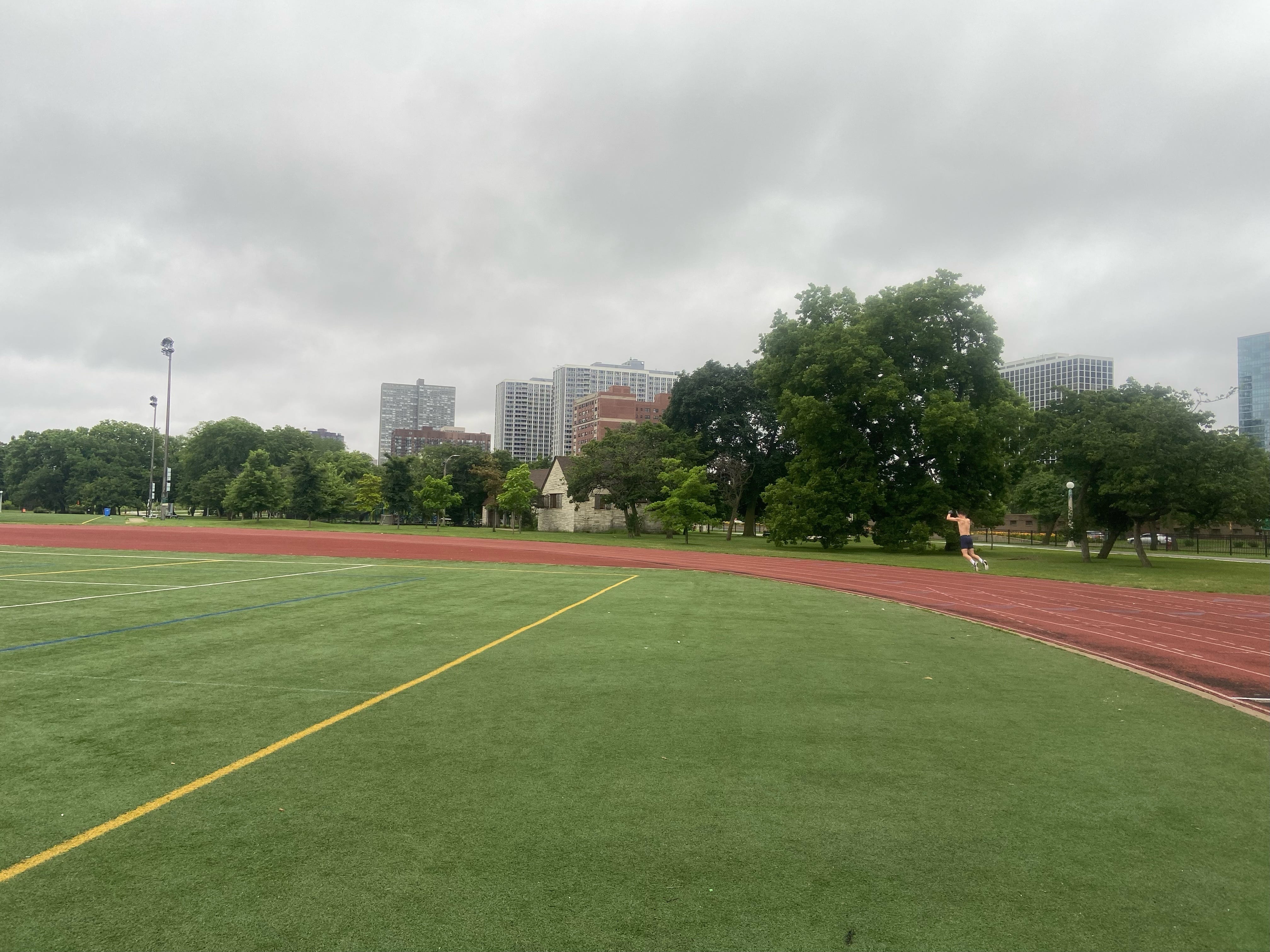
Reader, when I tell you that I finished the challenge, I know the information you’ll want to hear next. How long did it take? Which lap was the worst? How many burpees did I do? How often did I take breaks?
These quantifiable details make a story come to life, especially a sports story. If you knew the answers, you’d know how to respond. “That’s a lot,” you might say. “Of course you did,” you’d remark. “That’s still impressive though!” you’d reassure.
In the spirit of the misogi, I’m choosing to reject this familiar way of sharing this familiar kind of story. Instead of emphasizing numbers, I’m highlighting themes: suffering, incremental progress, and attention.
X meters into the challenge, when I had done X burpees and was nowhere near the end of the first lap, I looked back at Kirsten, who was waving at me from the starting line. I felt a deep sense of dread.
X minutes later when I put down my water bottle after the lap of burpees, steeled myself against the lap of walking lunges that lay ahead, and took my first step back over to the track, I felt both my legs tremble and buckle beneath me.
During that lap of lunges, I resolved to do sets of X, breaking down the massive task into smaller, achievable steps. I’m good at this strategy in my daily life: I make to-do lists, prioritize tasks, follow a marathon training plan, meal plan on Sundays, and draft essays early enough that I can go back and revise.
Only, this strategy had an adverse effect as I focused on how many lunges I’d done, how far they’d taken me, and how far I still had left to go. I started doing subconscious math, adding up how many lunges it would take me to get around the track. It was crushing to count X, X, X and feel the stabbing in my quads, knowing I had X more lunges before my arbitrary break, which was nowhere near the end of the track.
So I stopped counting and started focusing on my breath instead. Inhale and drop my knee, exhale and stand up tall. Inhale and drop my knee, exhale and stand up tall. Repeat, and repeat, and repeat, and repeat, and repeat, and repeat, and repeat, and repeat, and repeat…
During the bear crawl lap, which Kirsten walked alongside me, my head was down with my eyes trained on my hands, so I didn’t have a sense of how far I had gone. But I realized I was crafting a mental image of my progress around the track when I eventually looked up and collapsed as soon as I did. I said to Kirsten, “I thought I was so much farther.”
I’d been going strong until I checked to see how far I’d gone, at which point I immediately lost my strength.
The rest of the way, I kept my head down and walked. Hand, foot, other hand, other foot, hand, foot, other hand, other foot, hand, foot, other hand, other foot, hand, foot…
It was striking how frequently my body resorted to habitual tricks to track my progress. If I didn’t take care, I would find myself searching for any measure of affirmation or achievement. In a test of will, I kept looking to external signposts to tell me how I was doing. Even in the aftermath, it takes a conscious choice not to quantify the experience to make it more impressive to my audience.
Truly, it was between me and me. And even though I’m proud of myself for achieving something really hard, I’m more proud of my willingness to try something I might fail at.
My birthday-week misogi came at the tail end of my 29th year inspired by Indiana Pacer (and G-Leaguer) Quenton Jackson3, where I vowed to “Savor Each Step”.4
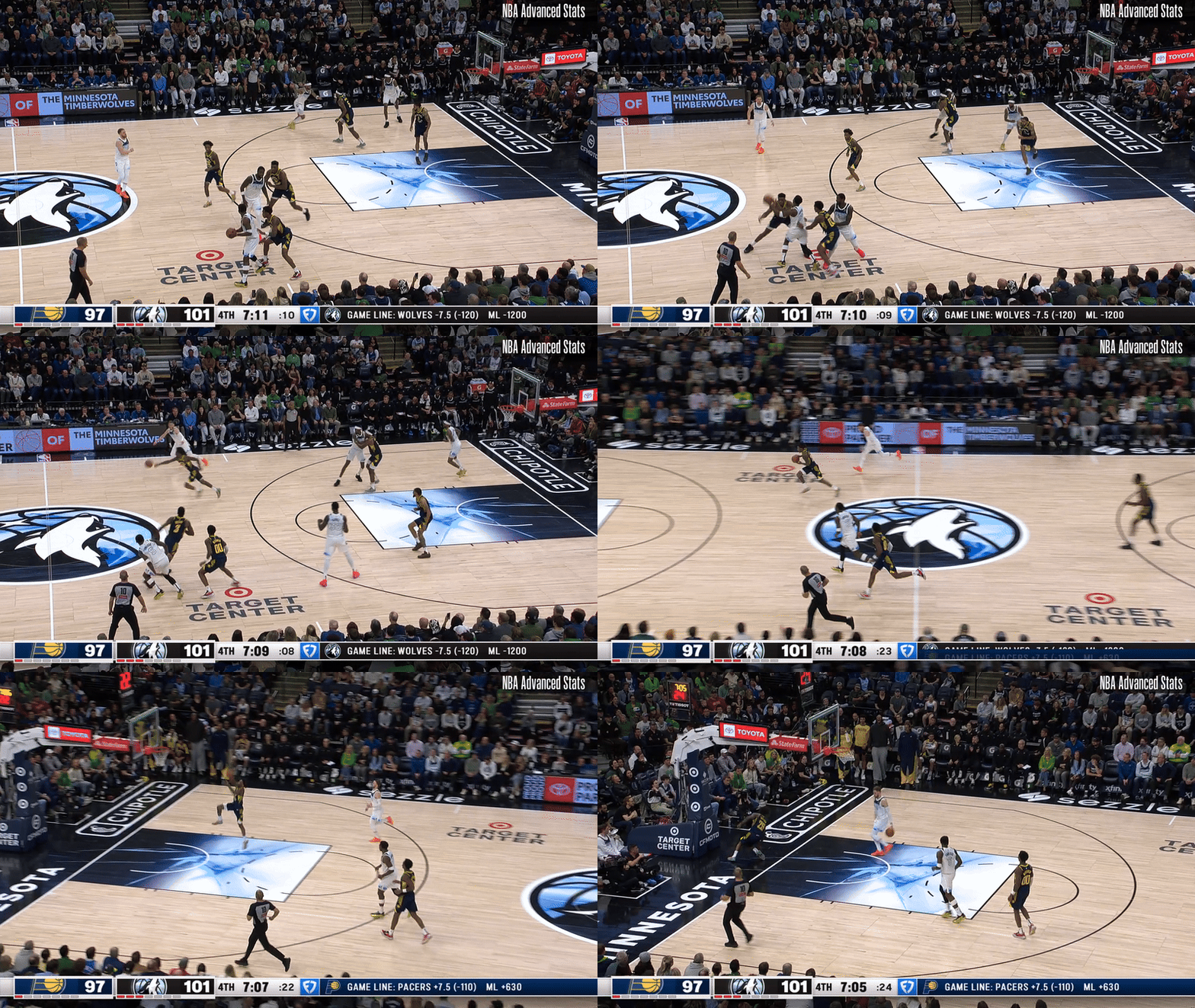
Last July, I set my intention for the year ahead:
“I feel my eyes wandering, but being at this stage of life doesn’t necessitate such longing. Focusing only on the future takes me away from the purpose I have today. Rather, being here, and being as excellent as I can, will illuminate options for whatever lies ahead.”
This year’s misogi – The Impossible Mile The Dell Curry Mile – was also a wonderful, and unexpected, transition to my 30th birthday.
The greatest shooter of all time is named Wardell Stephen Curry II. He goes by Steph, but his dad of the same name goes by Dell.
He had a 16 year career in the NBA for five different teams, most famously for the Charlotte Hornets. He was a career 40.2% three-point shooter, which is very good by today’s standards, and excellent for the 1980’s-2000’s era he played in.5 He was recognized as the Sixth Man of the Year in 1994. These days, he’s part of the amazing commentator duo for the Charlotte Hornets alongside Eric Collins.6
Dell Curry, however, is best known for being a dad.
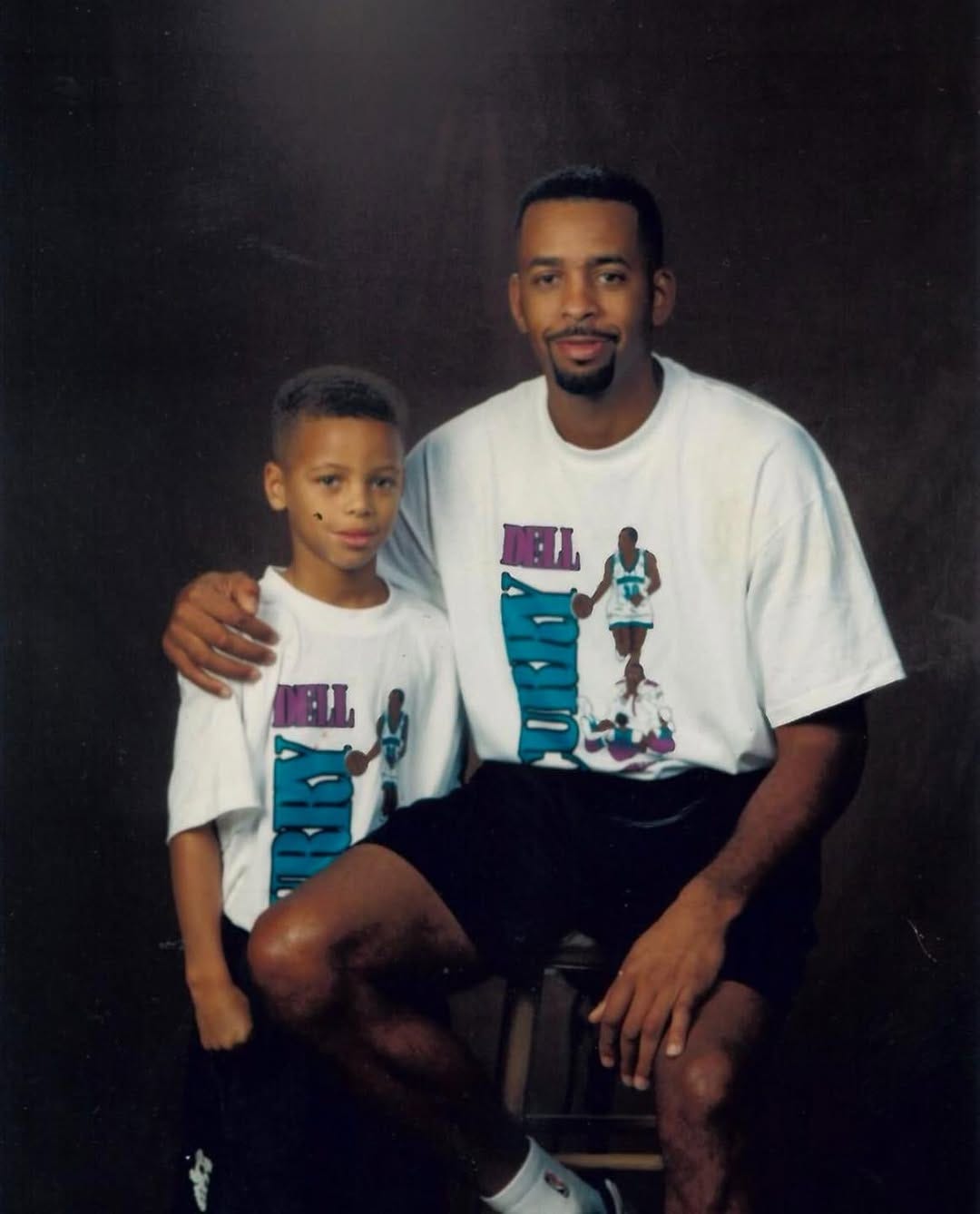
He has a legacy all his own, but when you think about Dell Curry, you think of his family.
This year, in my new phase of life – turning 30 and entering fatherhood – what I do, I do for my family.
Halfway through the bear crawl, Kirsten put my hand on her belly and I felt our daughter kick. Go Dad!
As my attention turns outside myself more than ever, I’ll remember that we are better when I’m at my best. A leader by example. Modeling that all of life is practice. Cultivating values together such that our family name is synonymous with them.
Whether incremental progress or moments of heat check, my Dell Curry year is a reminder to:
Honor Our Name
ps – I had one more idea in my notebook to add a touch more flavor to my focus on family. It’s so silly but I can’t help myself:
Our + Era = Aura
Abbott, Henry, and John Early. Ballistic: The New Science of Injury-Free Athletic Performance. W. W. Norton & Company, 2025.
forecastor; hampster
He didn’t play a lot this season, but he was on the bench during the Pacers’ miraculous run to Game 7 of the NBA Finals. See?
This footnote is for NBA Sickos only: In his only 2025 Summer League game, Jackson scored 24 points on 8/10 shooting, including 1/1 from three point distance, 7/7 from the free throw line, 3 assists, 2 steals, and just 2 turnovers. With the Pacers’ loss of depth this year, I think he might be ready to make the leap to a rotation role in the NBA.
Despite that prowess, for his career Dell Curry only averaged 2.9 three-point attempts per game! The game has changed a lot. His son has averaged 9.3 attempts per game for his career, and as many as 12.7 in 2020-2021.
If you aren’t familiar with Eric Collins, you have to watch at least part of this video. No commentator has a more contagious excitement for sports, and he is absolutely hilarious.
Really loved this!